
The year, 1970 – the search for
an affordable Hammond – the place, London, Hammersmith, the Hammond Organ Center. The result: a “spinet” model, the T-200 with built-in rotating speaker. Nice tone-wheel sound yet compact size for a small apartment, and not so difficult to move to the 5th floor (quite a task some years later when the B-3 and the Concorde had to be moved out !)
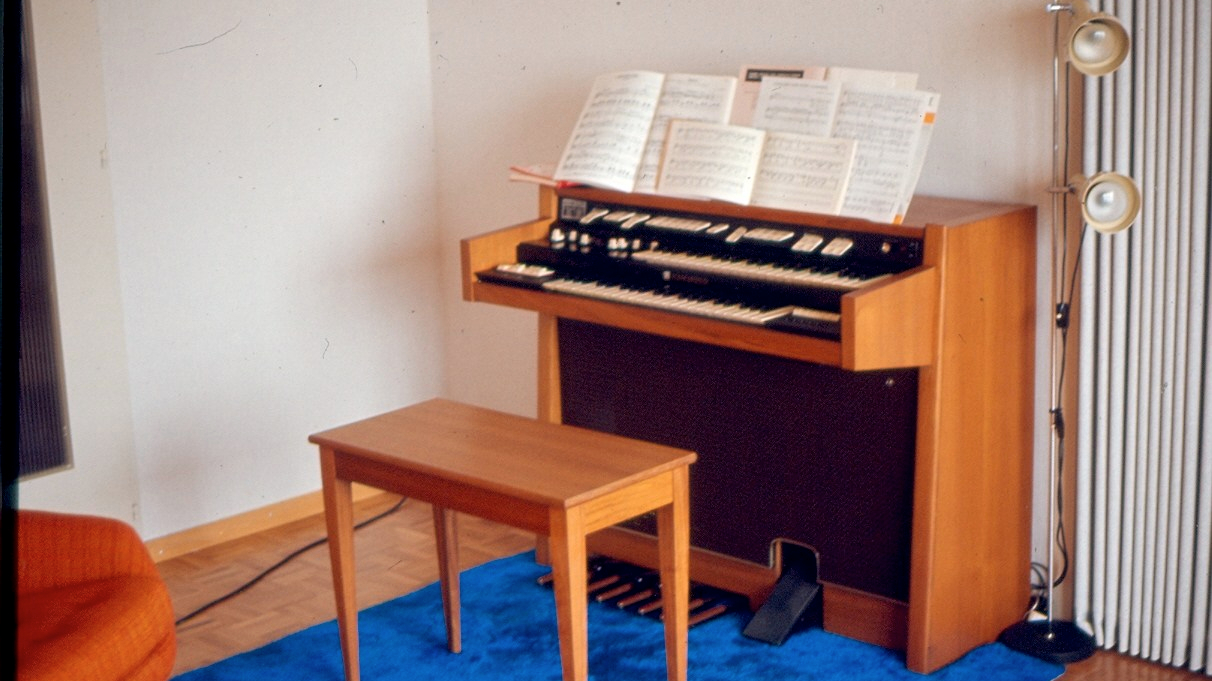


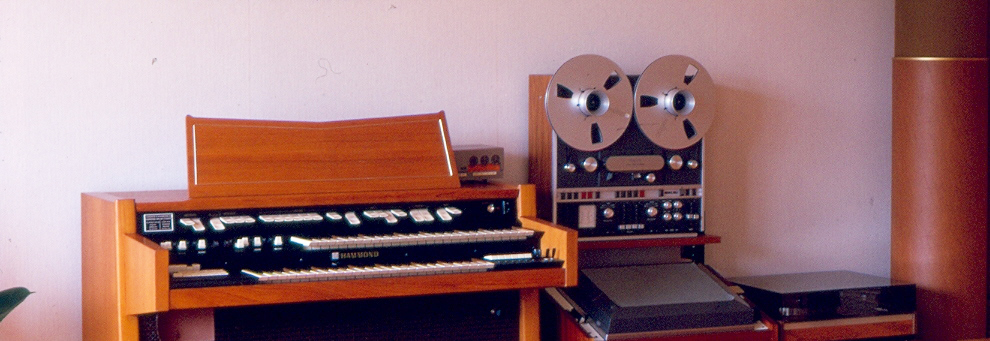
Some of the early “learning to play” recordings have survived – only had to search though the tape archives and order a new drive belt for the TEAC A3440 on which the original recordings were made.
(Note: recording is direct, so the Leslie is not captured – and the audio files are here to demonstrate the sound, not the progress of the learner!)
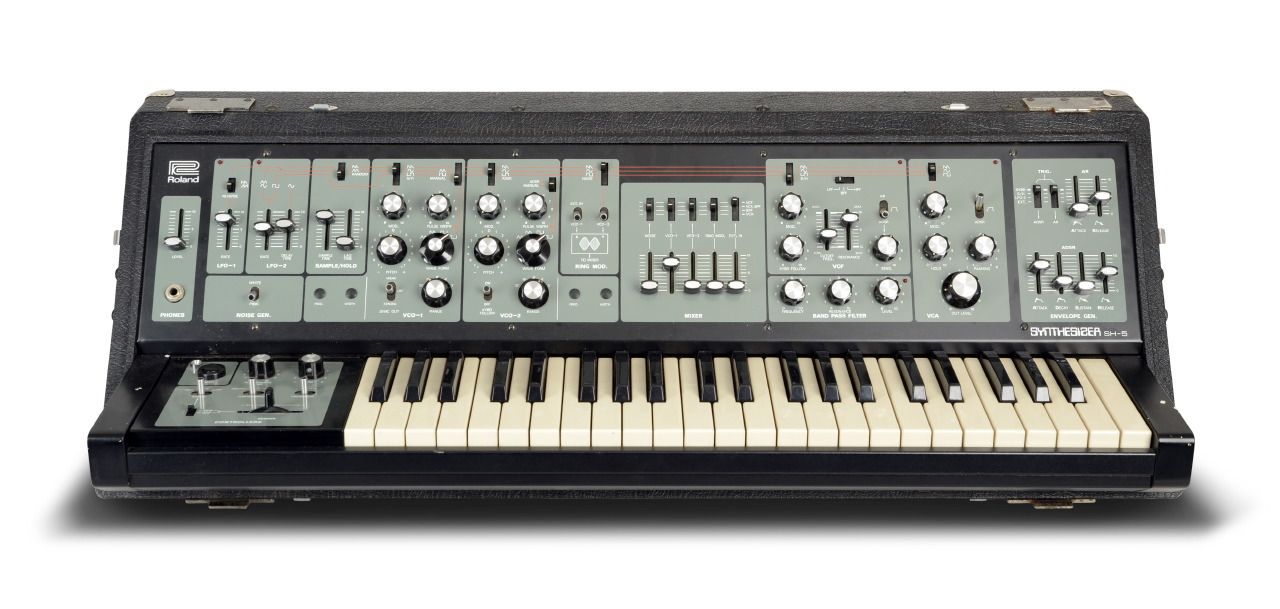
Among the T200 recordings, there are two with an added guitar-like sound which brings back memories of another piece of gear, long since forgotten: – a Roland SH-5 suitcase synthesizer (1975). It was purchased in London’s Tottenham Court Road and brought back to Switzerland as carry-on luggage. This sound, created by multi-track tape sync, is probably our only surviving record of it – the photo is from the Roland Synth Chronicle website which no longer provides this information, but we found the Roland Indonesian site with the photo and text “1975: SH-5 Roland’s first 2VCO analog synthesizer. The large one-piece case shocked keyboardists at the time. This synth was also the first to have a pitch bender lever.”
Fast forward to 2025, one of these multi-tracks was used in our recreation of a 1966 recording at the Corn Exchange Bedford. Here is the music and video extract, without the water and waves sound effects of the original film:
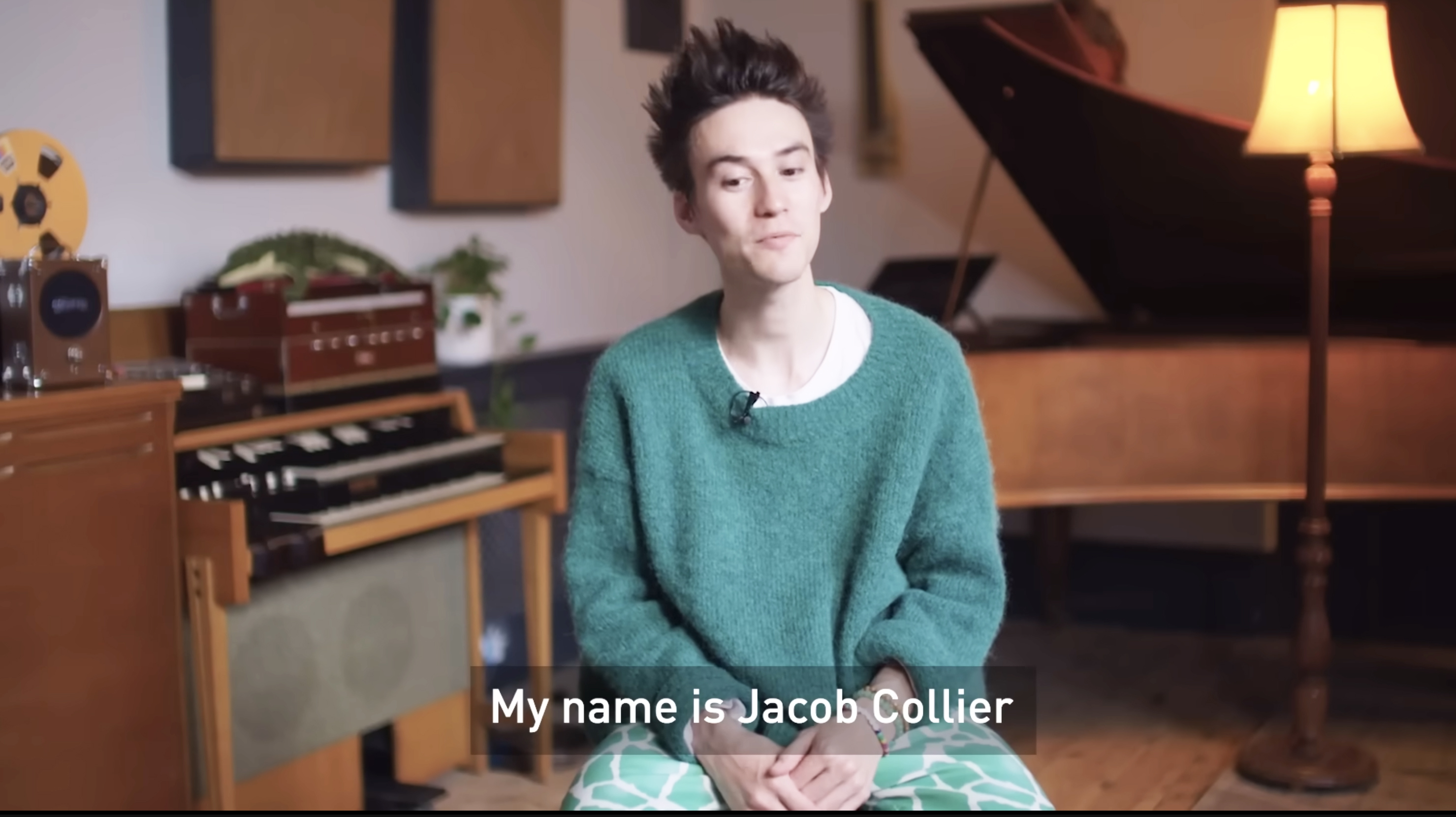
A 2025 surprise – a screenshot of Jacob Collier seated close to a Hammond model T and a Leslie speaker cabinet similar to the 736 we have with our B3. He was being interviewed about the making of a film for Greenpeace — on a floating platform, by a glacier, in the Arctic. So full circle on the model T, somewhere it does still exist.
 marcomathieumedia.com